


Prefabricated Modules for Schools: Everything You Need to Know
An in-depth look at the role of prefabricated modules in school construction, from the needs of public authorities to the solutions offered by SO.GE.SE.
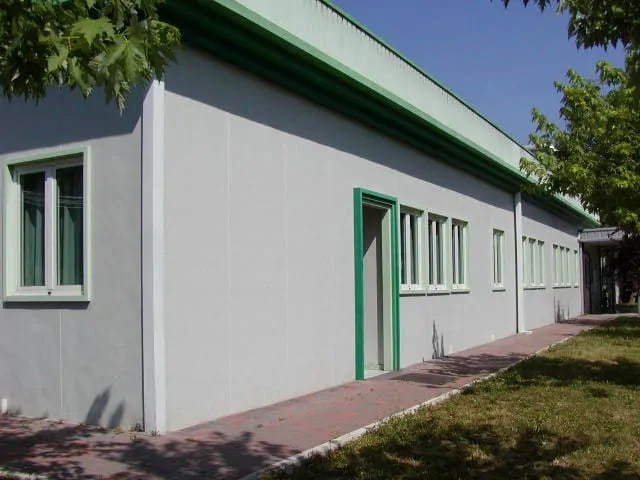
In recent years, the world of education has been facing significant changes, linked to the evolution of teaching needs, the upgrading of existing buildings, and the necessity of having safe, functional, and rapidly available spaces. In this context, prefabricated modules now represent a concrete support for schools and public authorities, offering structures designed to effectively meet the needs for expansion, reorganization, and management of educational spaces, both in temporary and permanent settings.
In this article, we at SO.GE.SE. will take an in-depth look at prefabricated modules for schools, analyzing their role in school construction and the solutions currently available to meet the needs of educational institutions and public administrations.
Why schools and public authorities choose prefabricated modules
Schools and public authorities choose prefabricated modules mainly for their ability to respond quickly and in a structured way to various needs related to the management and evolution of school spaces. Prefabricated modules are in fact used both for permanent or temporary school expansions and for the construction of temporary schools during renovation or safety-upgrading works on existing buildings. They are also an effective solution for managing overcrowding, allowing the creation of new classrooms or teaching spaces without interrupting school activities.
Another area of application concerns the construction of new educational hubs in expanding areas, where it is necessary to respond quickly to the growth of the school population. Prefabricated buildings are also used for the creation of ancillary spaces, such as cafeterias, laboratories, administrative offices, and areas supporting teaching activities.
Advantages of prefabricated modules compared to traditional school construction
Compared to traditional school construction, prefabricated modules offer a number of concrete advantages that explain their growing adoption in the public sector:
- reduced construction times
- predictable and manageable costs
- minimal impact on school activities
- high standards of comfort and safety
- flexibility and adaptability over time
Reduced construction times
One of the main strengths of prefabricated modules is their speed of execution. On average, the production phase of the modules takes between 8 and 12 weeks, depending on the size and complexity of the project. Installation and connection of building systems, on the other hand, are completed in just a few days, allowing school spaces to become operational very quickly.
This feature is particularly advantageous for schools and public authorities that must meet strict deadlines and ensure continuity in teaching activities.
Predictable and manageable costs
Prefabrication allows for greater cost certainty compared to traditional construction, thanks to upfront design and standardized production processes. For public administrations, this means being able to plan investments more accurately and reduce the risk of unexpected expenses. However, the topic of costs deserves a more in-depth discussion, which we will address in one of the following sections.
Minimal impact on school activities
Prefabricated modules make it possible to significantly limit the impact of construction work on existing school spaces. Shorter construction times and reduced on-site work help contain noise, dust, and disruptions, safeguarding the safety of students and staff while ensuring the regular continuation of classes.
High standards of comfort and safety
Prefabricated structures intended for school construction are designed to provide adequate levels of thermal and acoustic insulation, environmental comfort, and safety. The environments are suitable for everyday teaching activities and compliant with current regulations, ensuring appropriate conditions for learning and prolonged use.
Flexibility and adaptability over time
Modularity is a further advantage over traditional buildings. Prefabricated modules can be expanded, reconfigured, or reused over time, allowing schools to adapt spaces to evolving needs without having to intervene on the entire building.
Essential requirements of prefabricated school modules
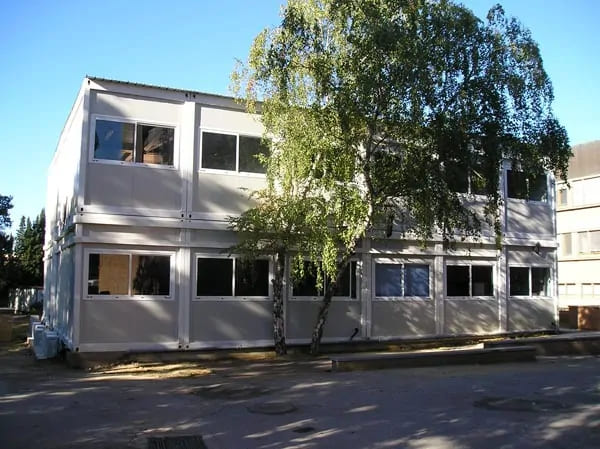
prefabricated modules in school construction
These modular solutions must meet precise requirements, which are essential to ensure safety, comfort, and regulatory compliance.
From a structural point of view, prefabricated school buildings must comply with current building and seismic regulations, as well as meet fire safety requirements. A central role is played by environmental comfort, with adequate levels of thermal and acoustic insulation—essential for teaching environments—and proper natural and artificial lighting. These structures must also include appropriately sized and accessible restroom facilities and comply with regulations on the removal of architectural barriers, ensuring full usability of spaces for all users.
For this reason, prefabricated school buildings are not standard solutions, but require specific design, developed according to the needs of the educational institution and the guidelines of the commissioning authority.
How much do prefabricated modules for schools cost
The cost of a prefabricated school module can vary significantly depending on several design and technical factors. Before discussing indicative figures, it is important to clarify which elements have the greatest impact on the final price:
-
size and total surface area of the structure
-
level of internal and external finishes
-
required systems (electrical, plumbing, HVAC, special systems)
-
project configuration
-
educational use, which entails stricter regulatory requirements compared to other uses
This last aspect is particularly decisive: classrooms and school spaces must comply with specific regulations regarding safety, comfort, and accessibility—factors that affect costs compared to prefabricated units intended for less regulated contexts.
Regarding SO.GE.SE. solutions, the cost of prefabricated modules for schools can start approximately at €800 per square meter for basic configurations, up to more complex, fully customized turnkey solutions. These are always indicative values, which may vary depending on project requirements, the level of customization requested, and the public authority’s specifications.
In many cases, especially for temporary needs or renovation works, rental also represents a practical and advantageous option, allowing schools to reduce initial investment while maintaining high-quality standards.
SO.GE.SE. solutions for school construction
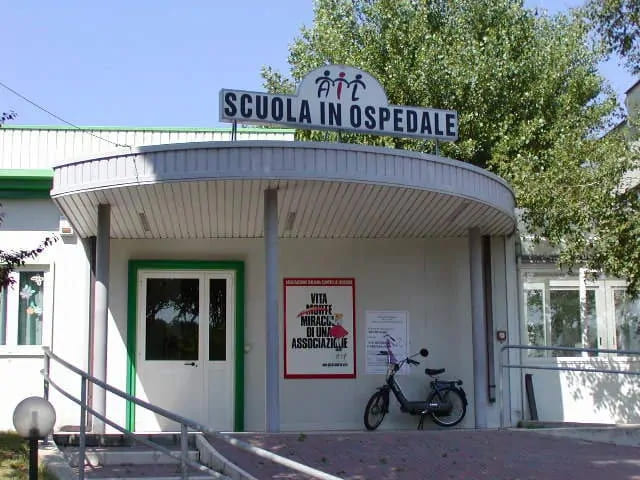 In such a complex context, having an experienced partner is essential for schools and public authorities managing complex school construction projects. SO.GE.SE. supports administrations in the creation of prefabricated structures designed to be functional, safe, and fully compliant with current regulations, meeting the specific educational and organizational needs of institutions.
Through the Quick Box brand, SO.GE.SE. offers prefabricated modules for the creation of temporary or permanent school spaces, providing a complete service that includes design, production, and installation. Coordinated management of all phases ensures reliable timelines, high construction quality, and effective integration of the structures into the existing school environment.
Quick Box modules for schools: configurations, timelines, and customization
Quick Box modules allow for the rapid and flexible creation of different types of teaching and service spaces, adapting to the needs of schools and public authorities. Structures can be used for classrooms, laboratories, cafeterias, administrative offices, teachers’ meeting rooms, and restrooms, ensuring functional environments that comply with relevant regulations.
Quick Box solutions can be developed as single modules or as multi-module configurations, which can be placed side by side or stacked, allowing the creation of complete school buildings that are easily expandable over time. Operationally, module production generally takes 8–12 weeks, while on-site installation and connections require only a few days, ensuring predictable timelines and minimal impact on school activities.
Quick Box modules also offer a high level of customization, allowing the configuration of internal layouts, systems, finishes, and access according to specific educational and regulatory requirements, both for temporary solutions and permanent structures.
Conclusion and the key role of SO.GE.SE.
In conclusion, an increasing number of schools and public authorities are choosing to rely on prefabricated modular structures to effectively meet the space and organizational needs of contemporary school construction. The growing adoption of these solutions reflects an established approach focused on flexibility and adaptability in ever-changing contexts.
In this scenario, SO.GE.SE., through Quick Box solutions, supports administrations in the creation of prefabricated school modules, providing technical expertise and tailor-made solutions. Contact us now for more information or a technical consultation!
