


Reopening of the Suez Canal: effects on the shipping market and on container prices
The reopening of the Suez Canal represents a crucial step for international maritime trade after months of intense tension on global shipping routes. The crisis affecting one of the world’s main logistical hubs has had significant repercussions on the shipping sector, impacting transit times, the organization of supply chains and, consequently, the container market.
With this article, we at SO.GE.SE. aim to provide a clear and up-to-date overview of the situation: starting from what happened during the Suez Canal crisis, we will analyze its effects on international shipping and the container market, and then examine what may change with the gradual reopening of the route and which strategies can be adopted during this transition phase.
The Suez Canal crisis: what happened and why it affected the market
In recent years, the Suez Canal has been at the center of events that have highlighted its strategic vulnerability. As early as 2021, the grounding of an Evergreen container ship caused a temporary blockage of traffic, clearly demonstrating how a single incident could affect the entire global maritime trade system. This initial critical event was followed, starting in late 2023, by geopolitical tensions in the Red Sea area, with Houthi attacks on vessels in transit. The deterioration of security conditions prompted many shipping companies to avoid the Suez Canal route, opting instead for longer but perceived as less risky deviations.
Detours via the Cape of Good Hope led to a significant increase in sailing times between Asia and Europe, with direct effects on route planning, delivery reliability and the overall efficiency of the supply chain. In a highly interconnected logistics system such as containerized transport, these disruptions quickly generated imbalances that spread across the entire market.
The effects of the crisis on international shipping
The Suez Canal crisis had a direct impact on the efficiency of international shipping rather than on the nominal capacity of fleets. Diversions along alternative routes—particularly via the Cape of Good Hope—significantly extended transit times, effectively reducing system capacity: with the same number of vessels deployed, each rotation required more days.
This mechanism had immediate consequences for market structure. Longer transit times meant fewer voyages completed over the year, reduced operational flexibility and increasing difficulty in maintaining schedules. Major leasing companies and market operators pointed out that disruptions in the Red Sea area helped sustain demand for capacity, precisely because the logistics system had become overall less efficient. In this context, even without a real increase in transported volumes, shipping had to absorb higher operational complexity: vessels tied up longer on routes, greater exposure to port congestion, and a general increase in the risk of supply chain disruptions. On this basis, the Suez Canal crisis began to generate structural effects, destined to spill over into markets connected to shipping, starting with the container market.
The impact of the Suez Canal crisis on the container market: prices and availability
Longer rotations and reduced shipping efficiency quickly translated into tension in the container market. With more days required to complete a voyage, a significant share of equipment remained tied up longer along the supply chain, reducing immediate availability at major logistics hubs. This mechanism generated higher “systemic” demand—not because transported volumes structurally increased, but because, for the same traffic levels, more containers were needed to keep flows operational.
Dry containers: sharper increases and repositioning imbalances
Dry containers, particularly 40’ High Cube units, were the first to reflect these tensions. As the most widely used type on Asia–Europe routes, they were directly affected by repositioning imbalances caused by diversions via the Cape of Good Hope.
A concrete example comes from the Chinese market: in 2024, prices for cargo-worthy 40’ HC containers rose rapidly over just a few months. In Shanghai, for instance, prices increased from around USD 2,150 in April 2024 to over USD 2,500 by May, with double-digit month-on-month growth. This was a clear sign of origin-side tightness, typical of periods of strong logistical inefficiency. According to operators and major lessors, used container prices remained at elevated levels through late 2024 and early 2025, precisely because a significant portion of containers continued to be “locked” in the operational cycle.
Reefers and special containers: a more selective market
In the refrigerated container segment, the effects of the crisis manifested differently. The reefer market, by nature more specialized, did not always experience the same percentage jumps as the dry segment, but it did see higher premiums linked to availability and service reliability. With slower rotations and less predictable schedules, operational continuity became a priority for many operators: longer transit times, reduced recovery margins and greater attention to equipment condition made the market more selective, especially for the food and pharmaceutical sectors.
For special and offshore containers, the crisis intensified an already existing dynamic: less transparent pricing and availability closely tied to specific contracts and projects. In these cases, the impact of disruption translated less into generalized price increases and more into greater difficulty in sourcing the right equipment at the right time and place.
.
What changes with the reopening of the Suez Canal
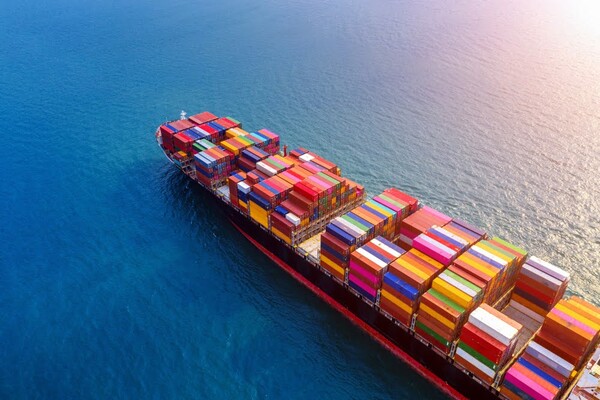 The gradual reopening of the Suez Canal introduces a significant shift for the shipping sector and the container market, but its effects are neither immediate nor automatic. Returning to the traditional route allows for shorter sailing times between Asia and Europe, reintroducing effective capacity into the global logistics system. From an economic standpoint, the mechanism is clear: shorter rotations mean ships can complete more voyages per year and containers remain engaged in the operational cycle for less time. In theory, this should help reduce pressure on equipment demand and ease tensions on prices and availability.
However, operational normalization takes time. Restoring schedules, gradually returning to traditional routes and repositioning containers generally require 8–12 weeks, provided the reopening is stable and not accompanied by new interruptions or security issues. Market stabilization—understood as a more structural rebalancing of freight rates, container availability and equipment prices—tends to develop over a longer horizon, spanning several quarters, and is also influenced by external factors such as the delivery of newly ordered vessels and operational choices by major carriers. In this context, while the reopening of the Suez Canal is a positive signal, a full return to normal conditions appears more realistic in the medium term, with an adjustment process that could extend into the second half of 2026, especially if traffic recovery is gradual.
SO.GE.SE.’s perspective: how to face the current Suez Canal crisis
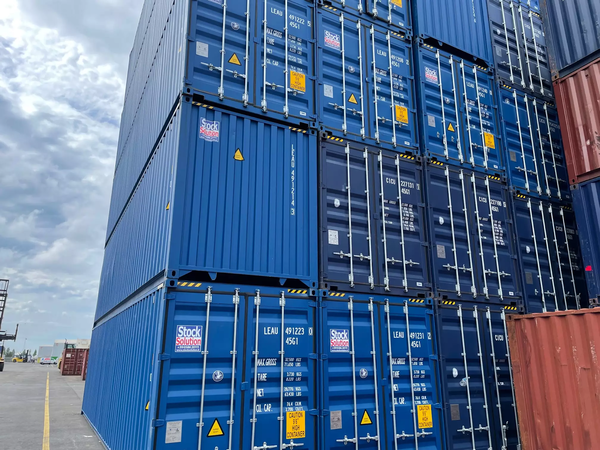 In a phase in which the market is gradually seeking a new equilibrium, we at SO.GE.SE. believe it is essential to view the Suez Canal crisis not as an isolated event, but as a factor that has highlighted the fragility and interdependence of global supply chains. The gradual reopening of the route is an important signal, but it does not automatically eliminate the operational and market uncertainties accumulated over previous months.
Experience in the container and logistics sector leads us to observe that, in such contexts, decisions regarding equipment management should be guided by pragmatic evaluations, avoiding choices driven solely by short-term pressure. It is precisely during the transition phase that balancing flexibility, operational continuity and investment sustainability becomes essential.
Purchase or lease: how to choose in today’s still-unstable environment
When facing uncertain volumes, temporary peaks or short-term projects, rental solutions or flexible formulas allow operational needs to be met without exposing companies to the risk of tying up capital in a market that may evolve toward greater container availability. This approach helps maintain elasticity and adapt more easily to changes in the logistics landscape.
Conversely, when container use is structural and continuous—as in certain industrial supply chains or cold logistics—selective purchasing or long-term leasing can remain valid options. In these cases, the choice is not driven solely by price, but by the need to ensure reliability, high quality standards and service continuity.
The most strategic SO.GE.SE. containers in this scenario
Within this framework, certain types of dry containers are currently better suited to ensure flexibility and operational continuity. Dry 40-foot High Cube containers remain an extremely versatile solution, easily reusable and redeployable across different routes and applications. Dry 20-foot containers, on the other hand, are an effective choice for handling dense or heavy cargoes, optimizing the balance between capacity and transport limits.
For refrigerated containers, the recommendation is to opt for these solutions only when there is real and continuous demand, prioritizing equipment quality and technical support over short-term considerations. Special and offshore containers should primarily be evaluated based on specific projects and guaranteed utilization levels, as they are less liquid assets with more limited market dynamics.
Through the availability of new and used containers and a consultancy-oriented approach, SO.GE.SE., with its Stock Solution and Idea Freddo lines, supports companies and logistics operators in choosing the most suitable solutions to face the current transition phase with greater awareness.
Conclusion and the key role of SO.GE.SE.
The reopening of the Suez Canal marks an important step toward possible market normalization, but shipping and container dynamics remain influenced by operational and structural factors that require attention and expertise. In this transition phase, correctly interpreting the context and selecting appropriate solutions is essential to safeguard operational continuity and investments.
To assess the solution best suited to your logistics needs or to receive dedicated support in choosing new, used or rental containers, contact the SO.GE.SE. team: our specialists are available for direct and personalized consultation.
