


Refrigerated Containers and the Pharmaceutical Cold Chain: How to Ensure Cold Chain Integrity for Medicines and Vaccines
Refrigerated Containers for Medicines and Vaccines: Controlled Temperature, Monitoring and Operational Continuity
The distribution of medicines, vaccines, biological products, and other temperature-sensitive materials requires rigorous cold chain management. In the pharmaceutical sector, even a temporary temperature deviation can compromise product stability, reduce its effectiveness, or make quarantine necessary pending further checks.
To ensure the cold chain for medicines and vaccines using refrigerated containers, reaching the required temperature is not enough: it must be maintained consistently, continuously monitored, and documented throughout the entire supply chain. This requires a refrigerated container with a temperature range suitable for the product — typically +2/+8 °C, +15/+25 °C, or freezing temperatures down to –60 °C — as well as sensors for recording temperature history, alarms for temperature excursions, backup power supplies, and defined procedures for power outages and transfers.
For this reason, the pharmaceutical cold chain cannot rely solely on the ability of a refrigerated unit to reach a specific temperature. It is essential to ensure that the required range is maintained consistently, monitored over time, and documented using suitable equipment such as calibrated sensors, data loggers, alarm systems, and remote monitoring solutions.
In this context, refrigerated containers and cold rooms represent a flexible solution for temporary storage, temperature-controlled transport, and the management of operational peaks or emergency situations. To support management in line with the principles of GDP (Good Distribution Practice), each application must be assessed according to the type of product, the required temperature range, the duration of storage or transport, and the need to document data for potential audits or inspections.
Static Storage and Temperature-Controlled Transport: What Changes in Management
The use of refrigerated containers and cold rooms in the pharmaceutical sector can address two main requirements: static storage, for example as a temporary extension of a refrigerated warehouse, and temperature-controlled transport, where the container becomes part of a more complex logistics chain.
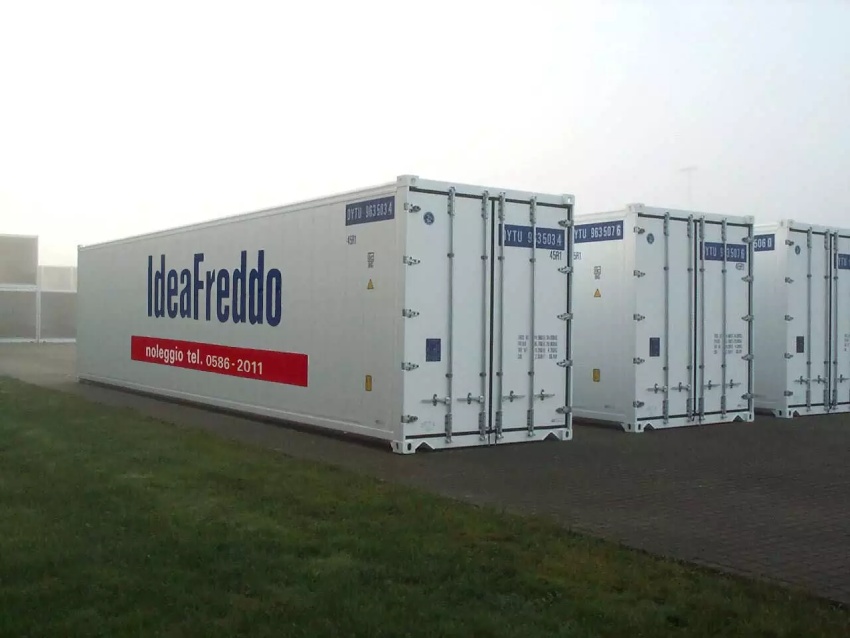
Cold Rooms for Static Storage
For static storage, the refrigerated container or cold room is positioned at a warehouse, production site, logistics hub, or healthcare facility. The unit is connected to a stable power source and can be tested under actual operating conditions, including internal temperature mapping.
This configuration is useful when fixed cold rooms reach capacity, during maintenance of refrigerated warehouses, vaccination campaigns, health emergencies, or temporary increases in stock levels. Even in these cases, however, it is necessary to assess product positioning, internal air circulation, door-opening frequency, and emergency procedures in the event of a power outage or malfunction.
Refrigerated Containers for Pharmaceutical Transport
In temperature-controlled transport, the refrigerated container is exposed to different operational stages: loading, transportation, possible stops, intermediate handling, and unloading. In addition to temperature stability, it is necessary to ensure continuous power supply, proper cargo securing, unobstructed air circulation, and continuous monitoring of internal conditions.
When transportation involves complex routes or documented stops, it is important to qualify the route and define procedures in advance for dealing with power interruptions, temperature excursions, delays, or operational changes along the route.
Which Idea Freddo Refrigerated Containers Should You Choose for the Pharmaceutical Cold Chain?
Choosing the most suitable refrigerated container for medicines, vaccines, and biological products depends on the volume to be stored, the required temperature range, the duration of use, and the type of application: temporary storage, intermediate storage, logistics hub, or temperature-controlled transport.
Based on these parameters, the Idea Freddo catalogue offers various solutions in terms of capacity and configuration, which should always be assessed according to the characteristics of the product and the expected operating conditions.
Small Volumes and Temporary Stock: 10′ Special Reefer
For small volumes, temporary stock, or situations requiring rapid additional refrigeration capacity, the 10′ Special Reefer is a suitable option. Its compact dimensions make it ideal for locations with limited space or for temporary refrigerated storage of smaller quantities of product.
Intermediate Storage: 20′ Special and 20′ HC Special
For larger volumes or intermediate storage requirements, solutions such as the 20′ Special and 20′ HC Special can be considered. These models are suitable when the refrigerated container needs to support a temporary warehouse, logistics hub, or facility requiring additional refrigerated space for a defined period.
Logistics Hubs, Emergency Stock, and Frozen Products
For logistics hubs, emergency stock, or large volumes, the 40′ HC Special significantly increases available refrigeration capacity, with a capacity of up to 22 Euro pallets. Where loading capacity is a priority, the refrigerated 45HC Pallet Wide can also be considered, with a capacity of up to 33 Euro pallets.
For frozen products or applications requiring lower temperatures than standard refrigeration ranges, the 40′ HC Super Freezer can also be considered, with a temperature range down to –60 °C. The choice of model should always be accompanied by a technical assessment of the product, operating conditions, and required storage specifications.
Ultra-Low Temperature Products: How to Manage Requirements Below –60 °C
Some biological medicines and vaccines require ultra-low temperatures, in some cases down to –70/–80 °C, which should be handled using dedicated ULT (ultra-low temperature) freezers. In these cases, the refrigerated container does not replace the ULT freezer but can provide its supporting infrastructure: a refrigerated container, cold room, or technical shelter can provide a powered, insulated, and monitored environment in which to install ultra-low-temperature equipment, together with the emergency power supply, alarms, and remote monitoring required in these settings. This can be useful for vaccination campaigns, temporary installations, and field operations. SO.GE.SE. supports healthcare and logistics operators in defining the most suitable configuration, integrating the refrigerated unit with the selected ULT solution.
Mistakes to Avoid When Managing the Pharmaceutical Cold Chain
Proper temperature management depends not only on the performance of the refrigerated container or cold room, but also on how the unit is used. Even a technically suitable solution can lose effectiveness if the cargo is incorrectly positioned, doors are left open for too long, or clear procedures for handling anomalies are not in place.
The most common mistakes include:
- obstructing internal airflow, when goods and packaging are placed against ventilation grilles: cold air cannot circulate evenly, creating areas with different temperatures within the same unit;
- overloading the unit, which forces the refrigeration system to operate beyond its designed capacity and reduces its ability to quickly recover the temperature after each door opening;
- leaving doors open for too long or opening them too frequently, allowing warm, humid air to enter and causing temperature fluctuations that can be difficult to recover from, especially during loading and unloading operations;
- loading products that have not been pre-cooled, which introduces heat into the environment and forces the refrigeration unit to work harder, increasing the time required to bring the entire load back within the correct temperature range;
- using uncalibrated sensors, which provide unreliable readings and may result in storage conditions being considered compliant when they are not;
- the absence of temperature mapping, which leaves potential critical areas of the unit unidentified and makes it difficult to establish appropriate product-placement criteria;
- the lack of procedures for power outages or malfunctions, which can leave operators without clear instructions during an incident, precisely when a rapid and documented response is required.
In the pharmaceutical sector, simply reading the temperature displayed on the unit is not sufficient to guarantee proper product storage. Recorded data, reliable instruments, and documented processes for managing deviations are required.
Temperature Monitoring, Traceability, and Remote Control
To reduce these risks, the unit can be equipped with specific optional tools and accessories for operational control, including data loggers, redundant calibrated probes, temperature-excursion alarms, remote monitoring systems, emergency diesel generators, and solutions that facilitate proper cargo management, such as suitable shelving, PVC strip curtains, internal lighting, and access-control systems.
Data recording makes it possible to reconstruct the history of storage conditions and provide useful information in the event of audits or document checks. For these activities, calibrated sensors and systems that allow data to be downloaded and stored in accessible formats, such as CSV or PDF, should be used.
From this perspective, accessories and optional features for cold rooms and refrigerated containers can help configure the unit according to the customer’s operational requirements. In addition, remote monitoring of refrigerated containers allows the main parameters of the refrigerated unit to be monitored remotely and enables faster intervention in the event of anomalies.
Another key aspect is temperature mapping, i.e. verifying temperature distribution inside the unit under actual operating conditions. This activity makes it possible to identify potential critical areas and establish appropriate criteria for product placement. The performance of a refrigerated unit also depends on its technical and structural design, from insulation to the management of airflow generated by the refrigeration system.
SO.GE.SE. Refrigerated Containers for Medicines, Vaccines, and Biological Products
For healthcare operators, pharmaceutical companies, and specialised logistics providers, renting refrigerated containers and cold rooms can be an effective solution when additional temperature-controlled storage capacity needs to be increased quickly, without investing in facilities that may remain unused once peak demand has passed.
This need can arise in various situations: vaccination campaigns, health emergencies, flu seasons, scheduled maintenance of refrigerated warehouses, temporary saturation of fixed cold rooms, or sudden increases in stock levels. For units available from stock, Idea Freddo indicates delivery within 48 hours of order confirmation in Italy, depending on the model required, location, transport availability, and site preparation.
Before delivery, the rental unit undergoes technical and functional checks, including inspection of the refrigeration system, setpoint, door seals, sensors, alarms, electrical system, and internal hygiene conditions. For pharmaceutical applications, it is advisable to agree on a documented protocol that may include PTI, calibration certificates, cleaning or sanitisation records, and reports of the tests performed.
Through its Idea Freddo solutions, SO.GE.SE. supports pharmaceutical, healthcare, and logistics operators in selecting refrigerated containers and cold rooms that can be configured according to specific storage, monitoring, and operational-continuity requirements.
Do you need to rent a refrigerated container for medicines, vaccines, or temperature-sensitive products? Contact the SO.GE.SE. team to receive technical advice and identify the solution best suited to your cold-chain storage, transport, and monitoring requirements.
What temperature ranges are used for pharmaceutical transport?
The temperature ranges for a refrigerated container depend on the product and the manufacturer’s specifications. Common ranges include refrigerated storage between +2 °C and +8 °C, controlled room temperature between +15 °C and +25 °C, and storage of frozen products at lower temperatures. The operating range must always be verified against the product’s technical documentation and confirmed through appropriate qualification and monitoring procedures.
What happens if a refrigerated container’s refrigeration unit fails during transport?
In the event of a refrigeration unit failure, it is essential to have predefined procedures in place before departure. Continuous monitoring and temperature alarms make it possible to identify anomalies quickly, while documented management of the incident allows the temperature excursion to be assessed and the appropriate actions to be determined, such as technical intervention, emergency measures, and product-compliance checks.
Is it possible to rent a refrigerated container already qualified for pharmaceutical use?
The rental of a refrigerated container for pharmaceutical use must be assessed according to the product, required temperature range, and expected operating conditions. A unit can undergo technical inspections, functional testing, PTI, sensor calibration, cleaning or sanitisation, and temperature mapping. Qualification for a specific pharmaceutical application must, however, be agreed upon and documented according to the customer’s requirements and the medicinal product being stored.
